Modern Filipiniana: From Baro't Saya to Your Closet
· Get Spotted
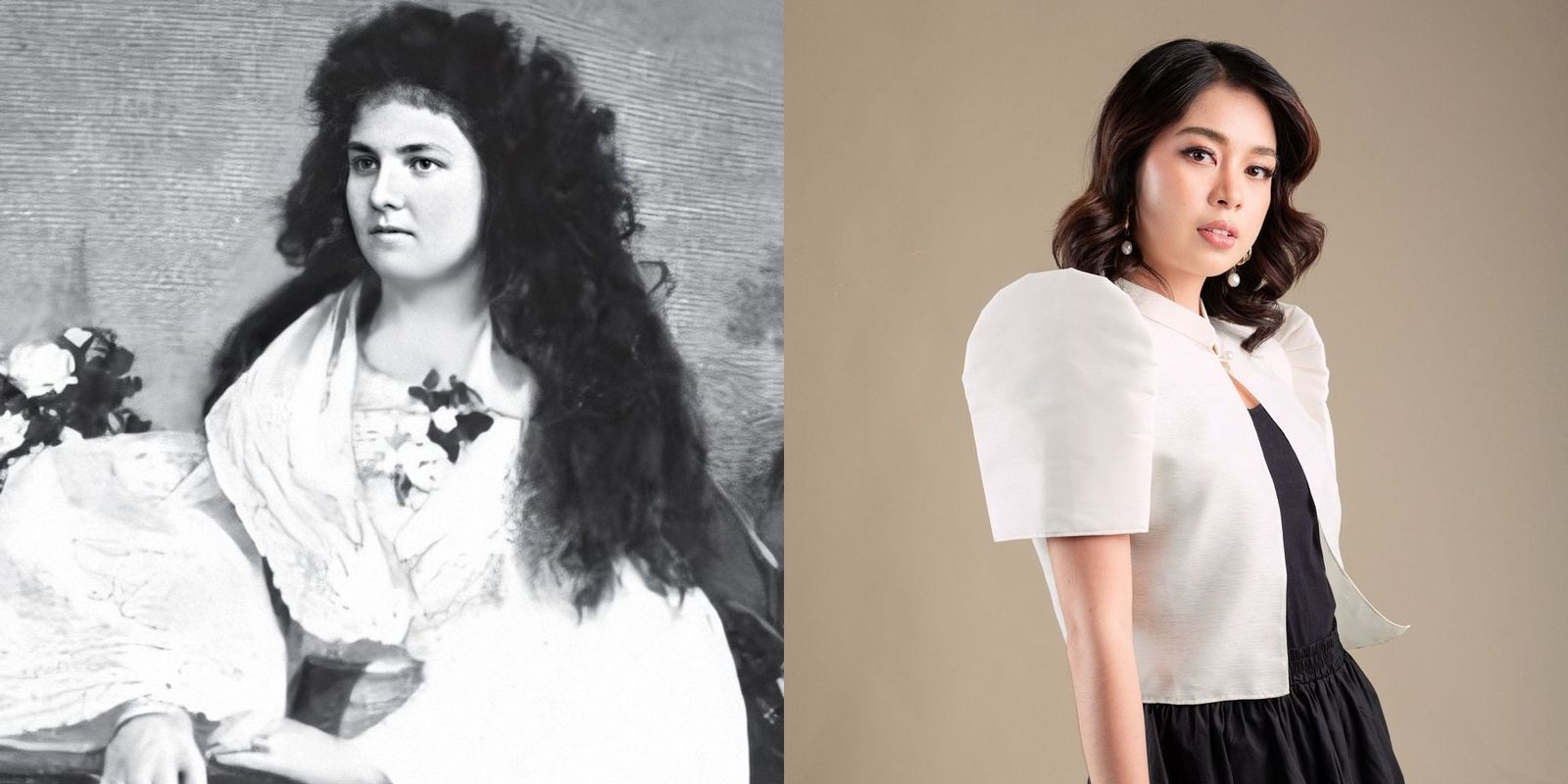
Ask any Filipina what she wore for Buwan ng Wika in grade school and you'll probably get a story about a borrowed baro't saya, a fan, and a lot of safety pins. The Filipiniana has been part of our lives for so long that we rarely stop to ask where it came from. So we did the reading. Here's a short history of the Filipiniana, and how we wear modern Filipiniana now, here in Bacolod.
Before the Spanish: the baro and the tapis
Long before anyone called it Filipiniana, women in the islands wore a simple collarless top, the baro, with a length of cloth wrapped around the waist. Depending on where you lived, it was a tapis, a patadyong or a malong. No buttons, no zips: just good cloth, wrapped well.
The baro't saya: the dress the islands made their own
Under Spain, the wrap became a long skirt, the saya, and the top became the camisa, a light blouse with wide sleeves. Together they're the baro't saya. What made it ours was the fabric. Sheer, crisp piña, woven from pineapple leaf fibres, suited the heat and showed off embroidery like nothing else. A white piña camisa is still the first picture most of us have in our heads when we hear "Filipiniana".
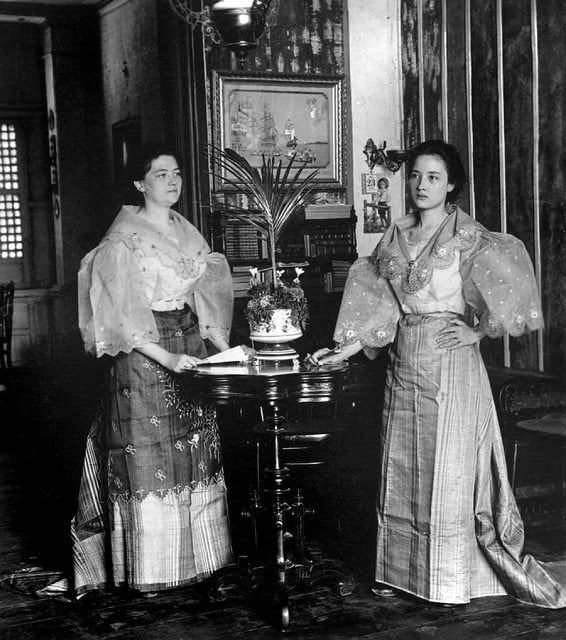
"Spanish mestiza girls in native dress, Manila", 1899, by Underwood & Underwood. Public domain, via Wikimedia Commons

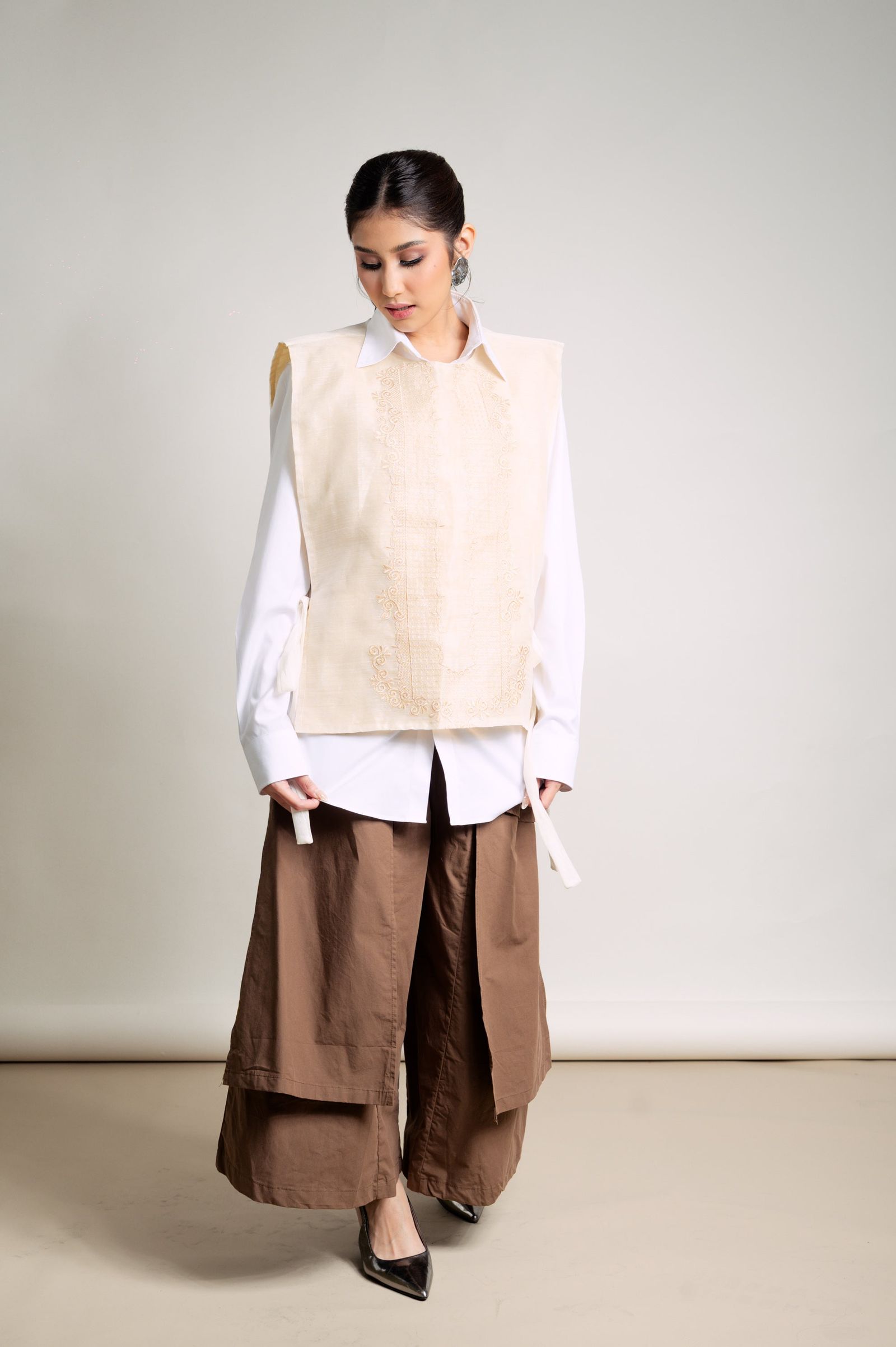
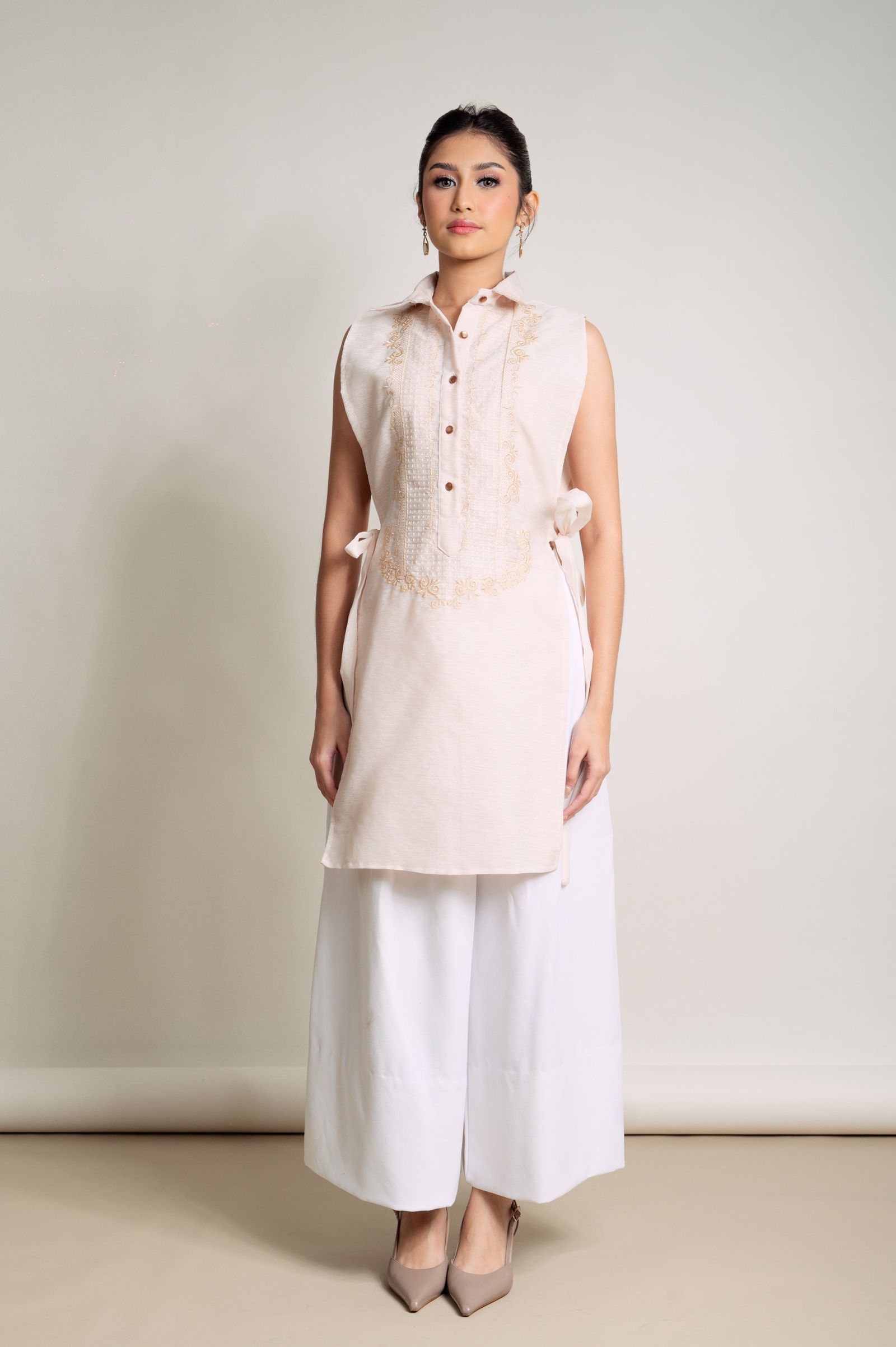
Today you'll find that same fabric in a piña bib worn over a plain white shirt: the old cloth, in a shape you can wear to work. Try the Old Style Short Piña Bib or the longer Segunda.
Maria Clara: a heroine gives the look a name
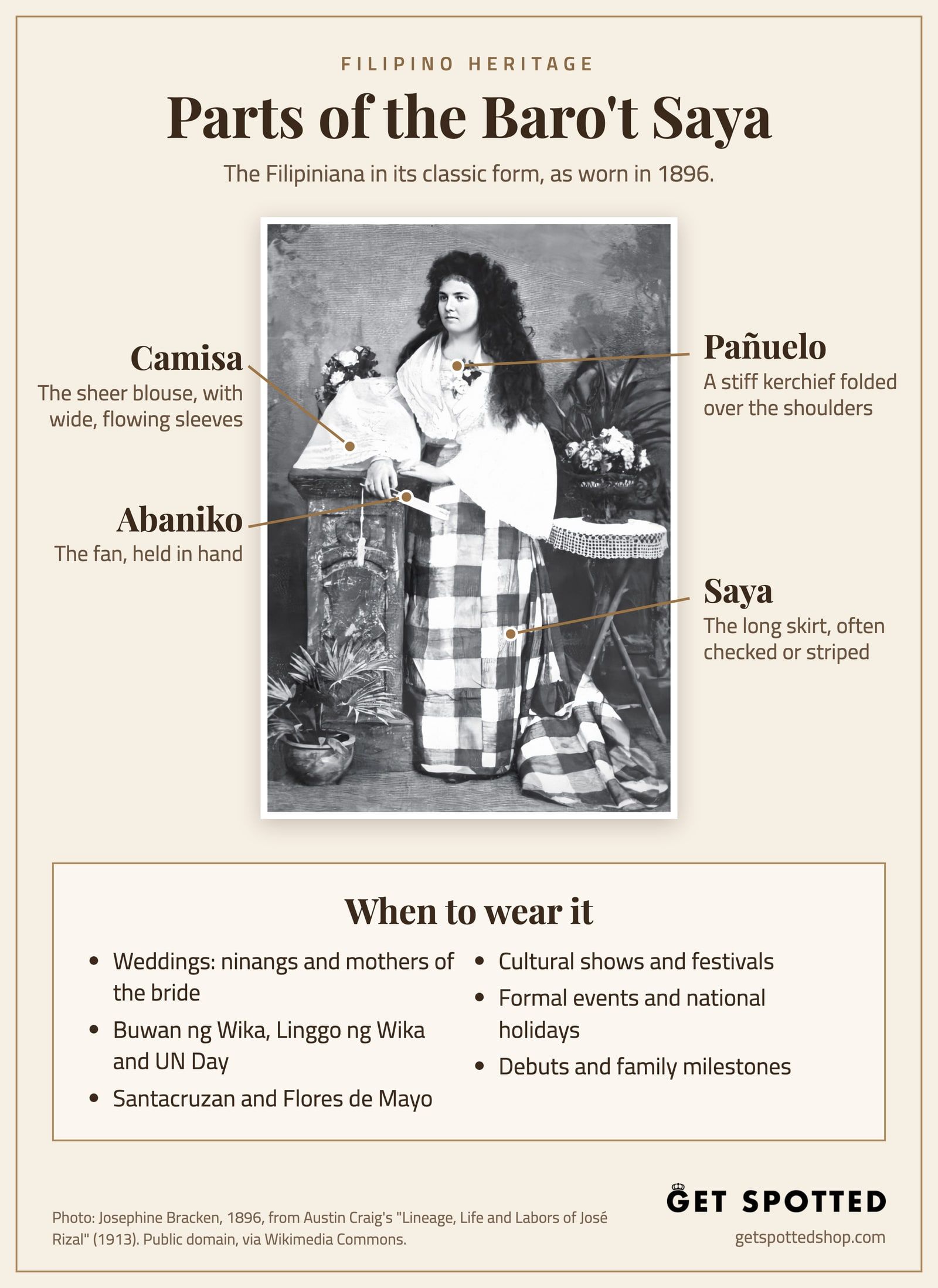
In 1887 José Rizal published Noli Me Tángere, and its heroine, María Clara, became the picture of the graceful Filipina. The dress took her name. A full Maria Clara has four parts: the camisa, the saya, a pañuelo (a stiff kerchief folded over the shoulders) and a tapis over the skirt. A fan, the abaniko, finishes it off.
You can see the look in this 1896 portrait of Josephine Bracken, who was with Rizal in his last years: a sheer camisa, a white pañuelo and a checked saya.
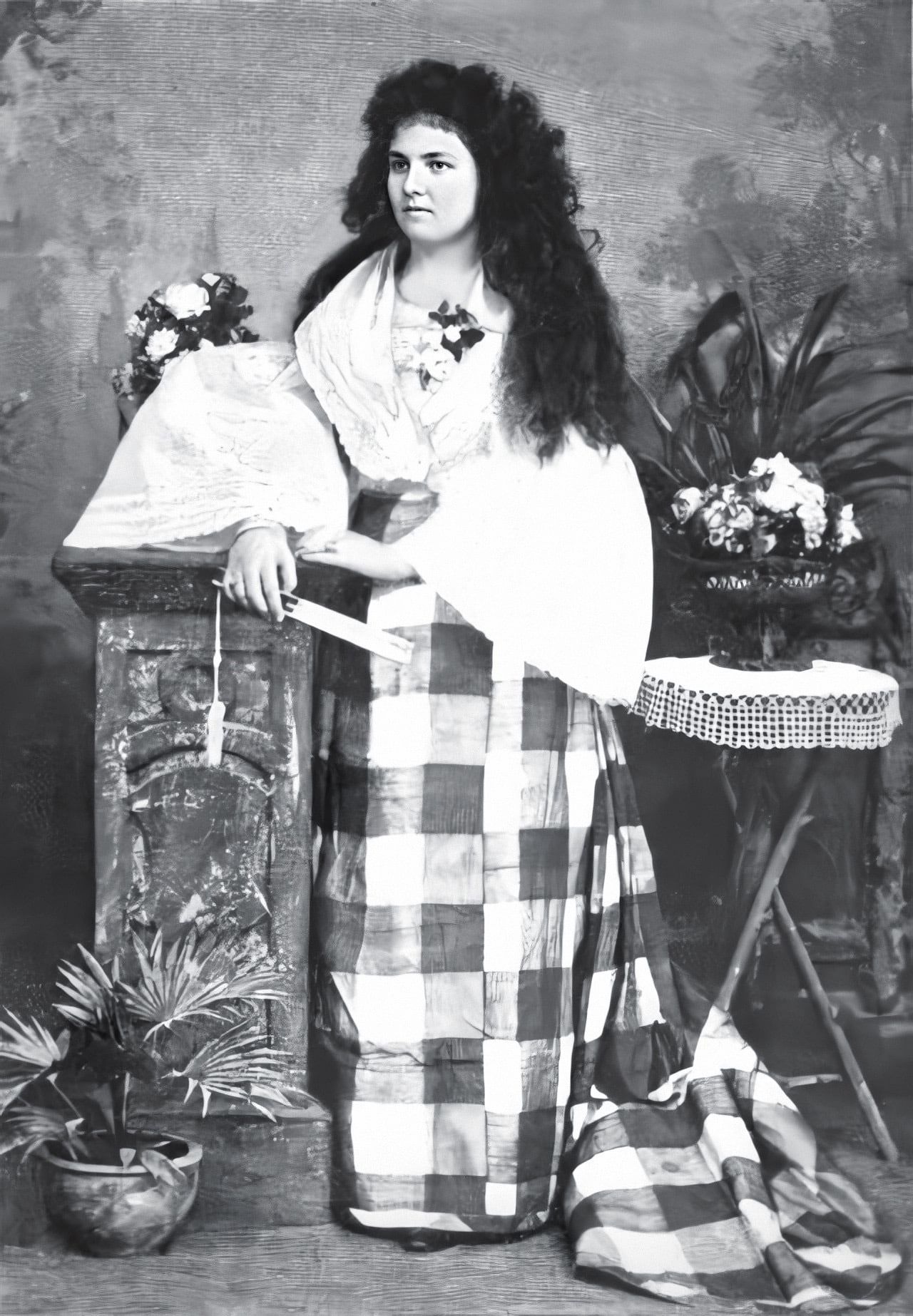
Josephine Bracken, 1896, from Austin Craig's "Lineage, Life and Labors of José Rizal" (1913). Public domain, via Wikimedia Commons

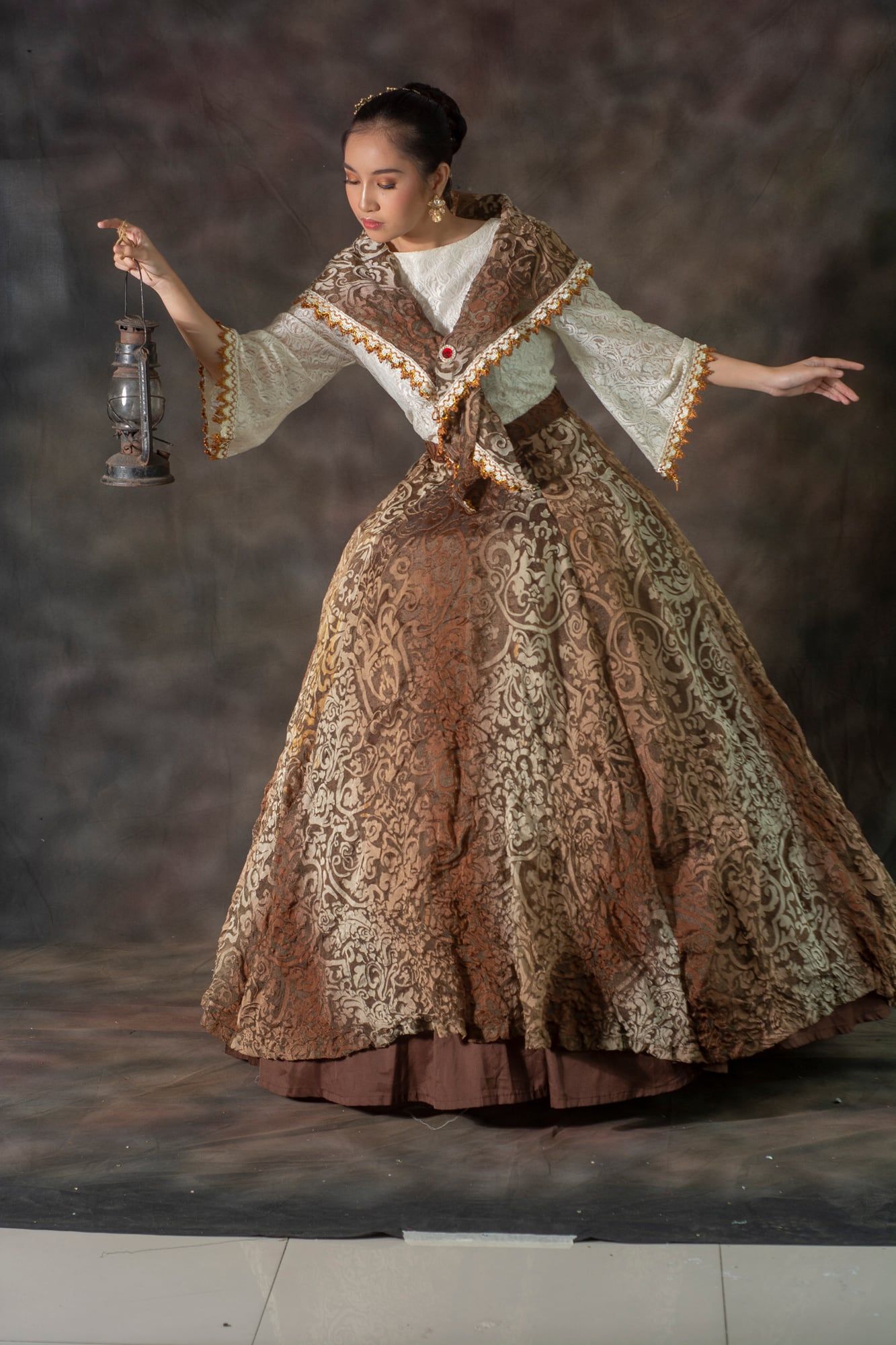
Photo: "Filipiniana Dress" by Ariel B. Ladrido, CC BY-SA 4.0, via Wikimedia Commons

Our own take keeps the sleeves and the fan, in a dress you can wear to a party:
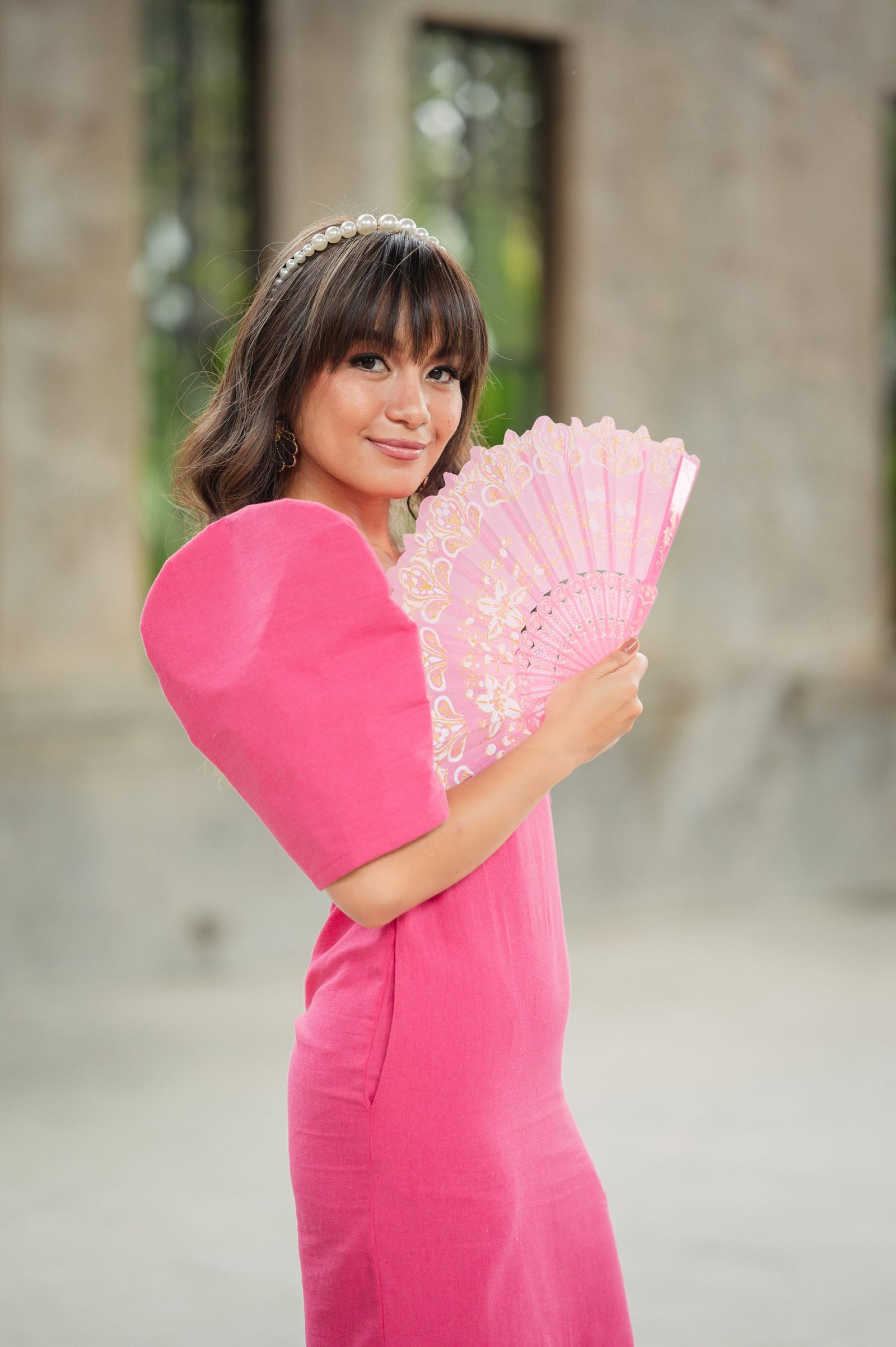
Traje de mestiza and the first butterfly sleeves
By the early 1900s, under the Americans, the parts of the dress started to match: the same colour and the same pattern from top to hem. This was the traje de mestiza, slimmer in the skirt, sometimes with a train, and with sleeves that grew wider and stiffer every season. You can probably guess where this is going.
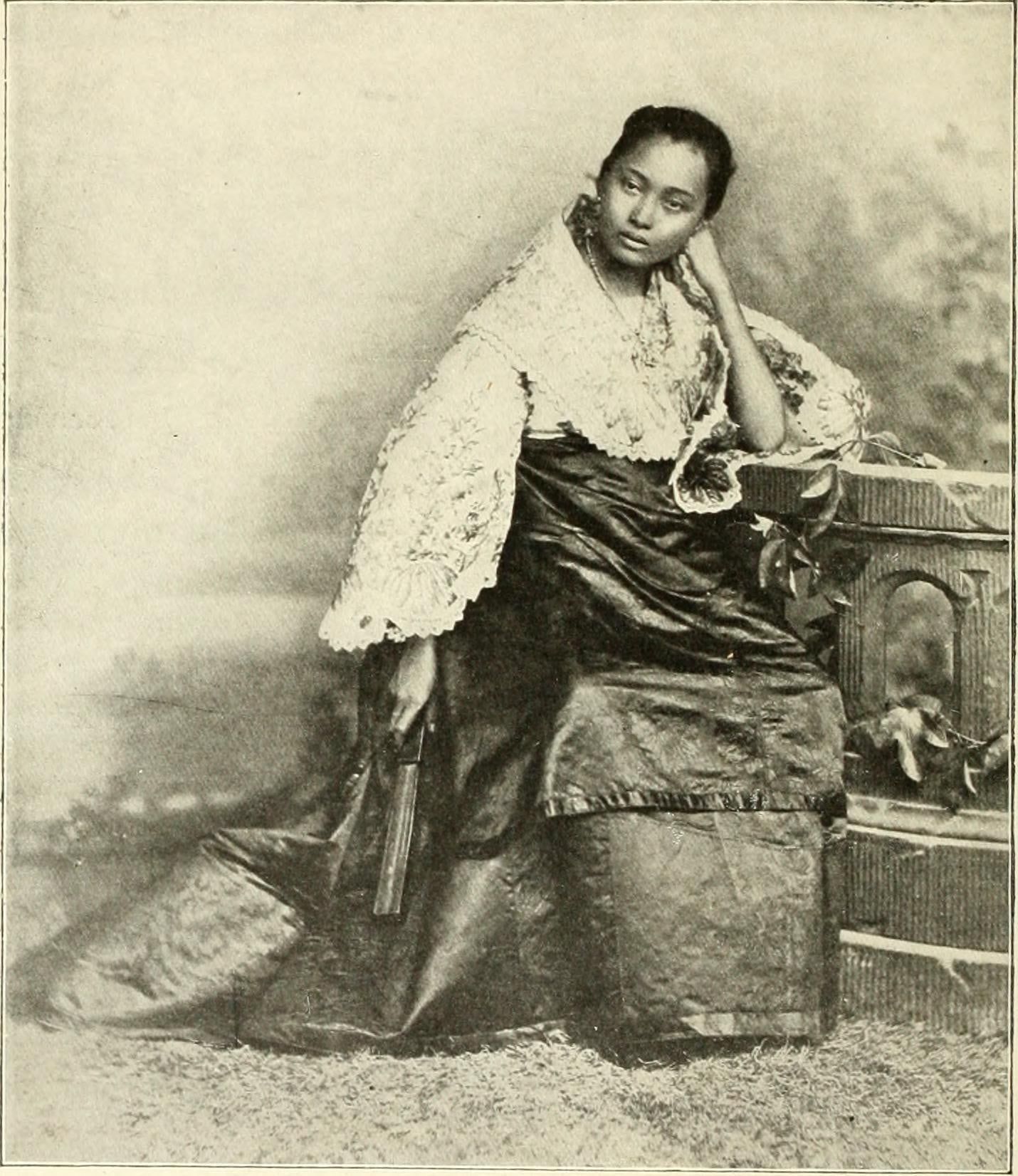
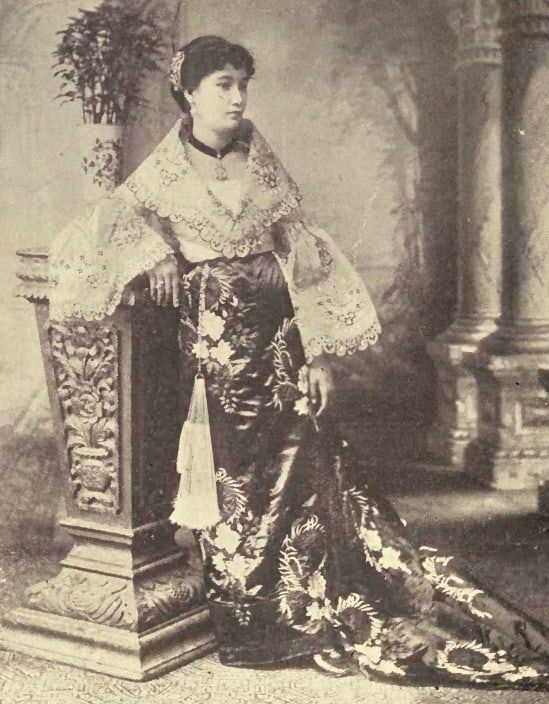
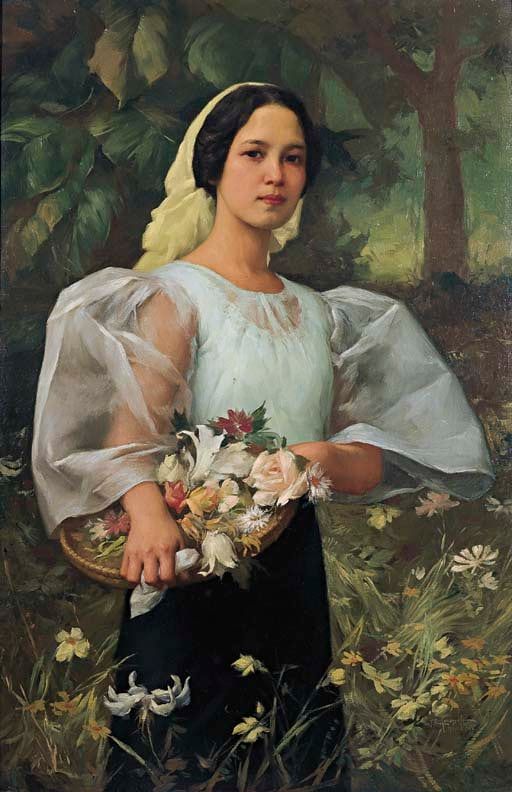
Left to right: a woman in traje de mestiza, from Ramon Reyes Lala's "The Philippine Islands" (1899), via Wikimedia Commons; a Spanish-Filipina mestiza, from Alden March's "The History and Conquest of the Philippines" (1899), via Wikimedia Commons; "Portrait of Fernanda de Jesus" by Fernando Amorsolo, 1915, via Wikimedia Commons. All public domain.


By the time Amorsolo painted Fernanda de Jesus in 1915, the sleeves had grown into the wide, sheer shape the terno would make famous.
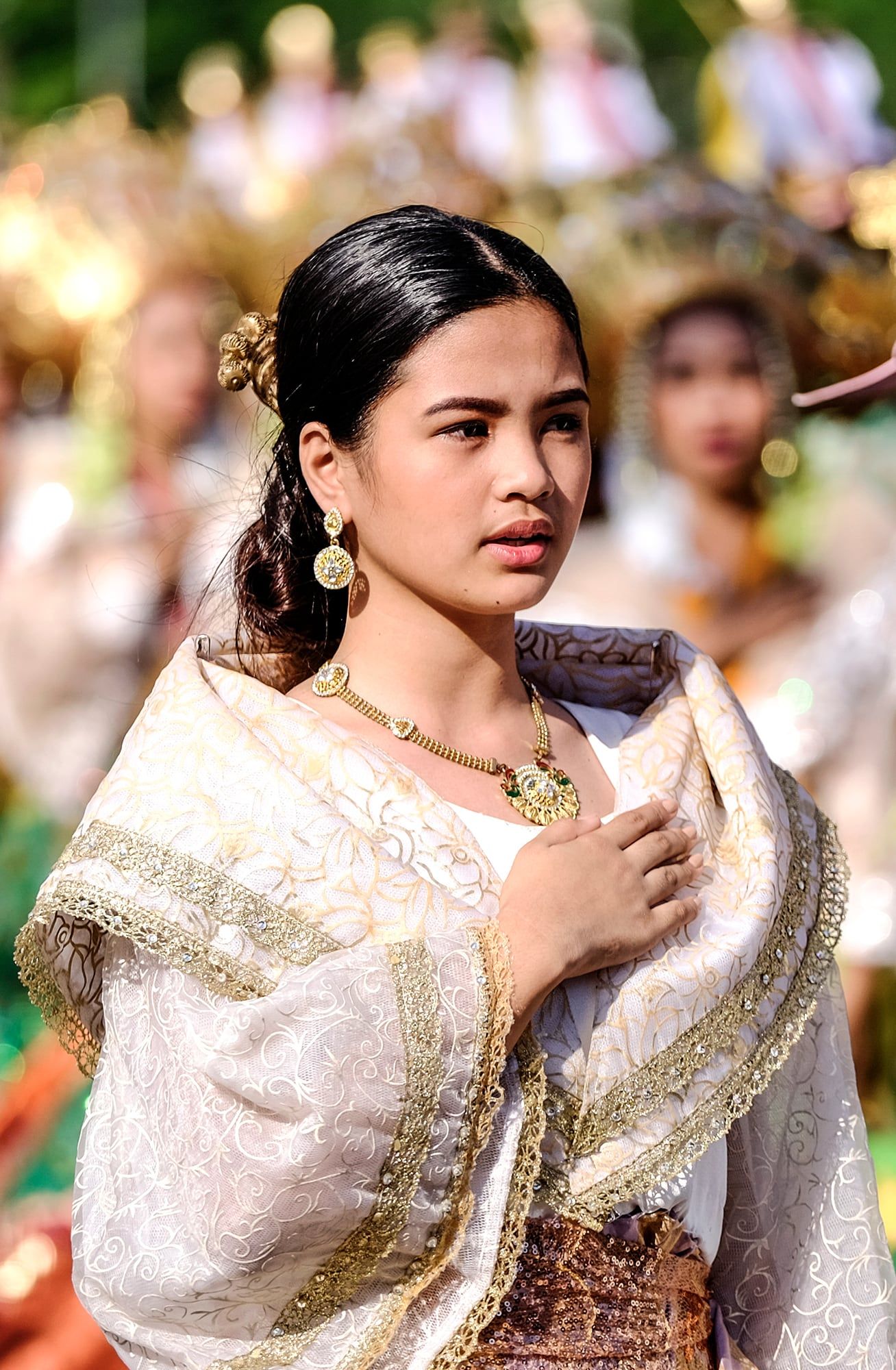
Photo: "WLF frobas (2)" by FroyR, CC BY-SA 4.0, via Wikimedia Commons

The terno: Ramon Valera and the sleeve that stands on its own
By the 1930s the look had been streamlined into one long gown with flat, arched butterfly sleeves: the terno. The couturier Ramon Valera is the name most tied to it. He didn't invent the terno, but he gave the butterfly sleeve a hidden, built-in structure so it held its shape, and he is credited with turning the gown into a single piece. In 2006 he was named a National Artist of the Philippines.
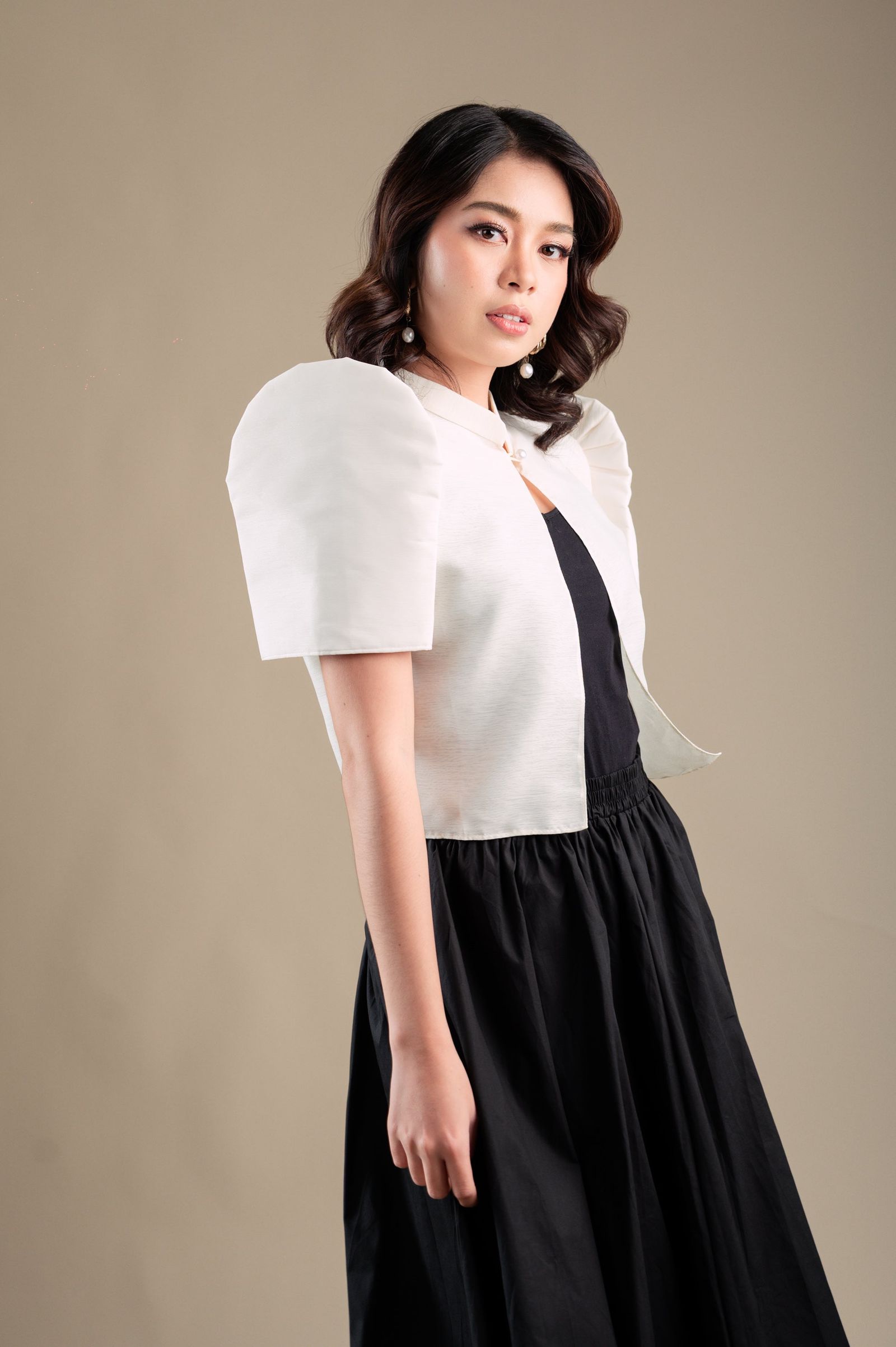
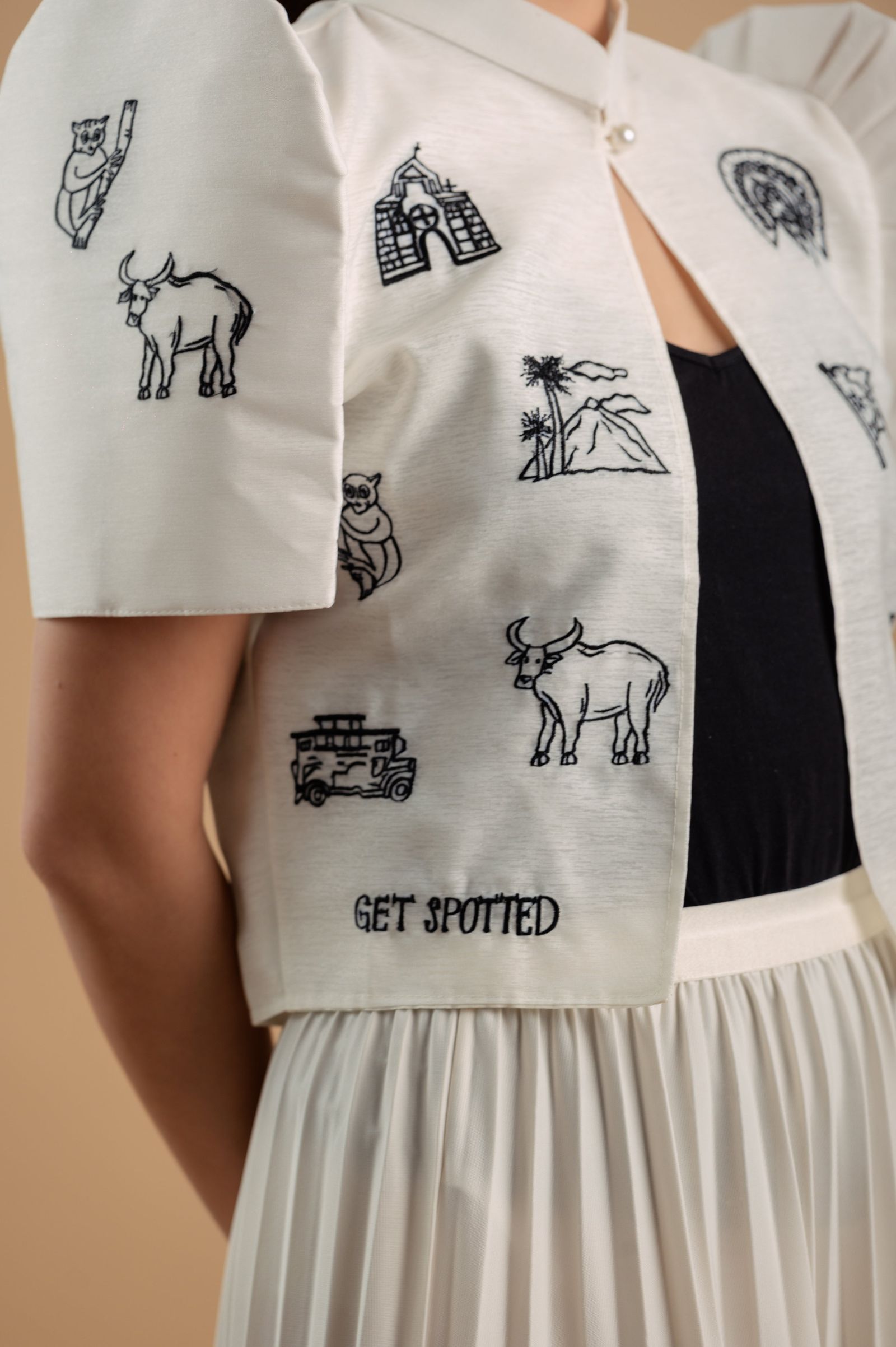
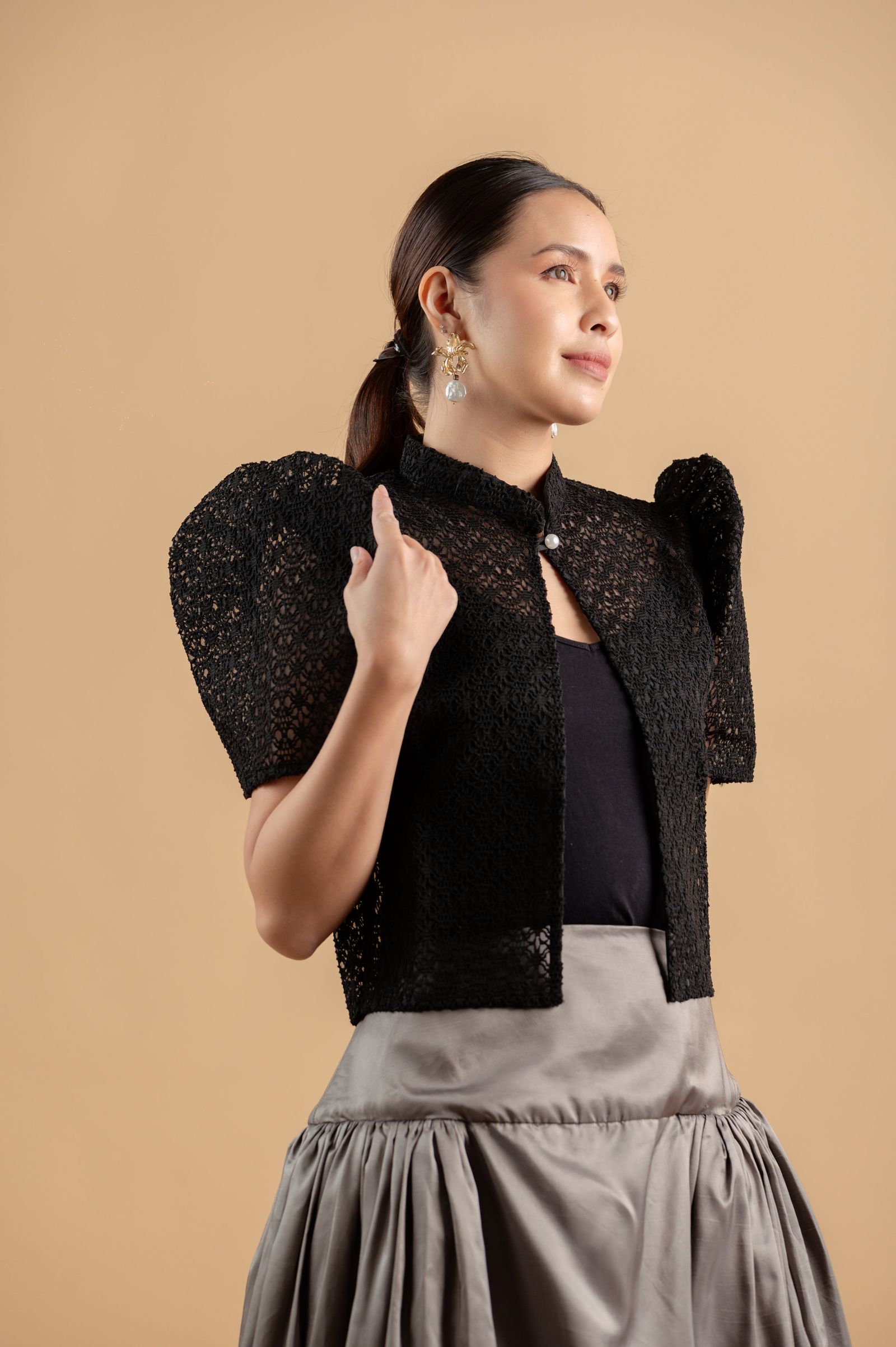
The terno is still what you wear to a gala, a state dinner, or a wedding where you're a sponsor. Our Plain Bolero and the Rubylyn Bolero from CHICKS x Get Spotted keep that structured sleeve, on something you can wear today.
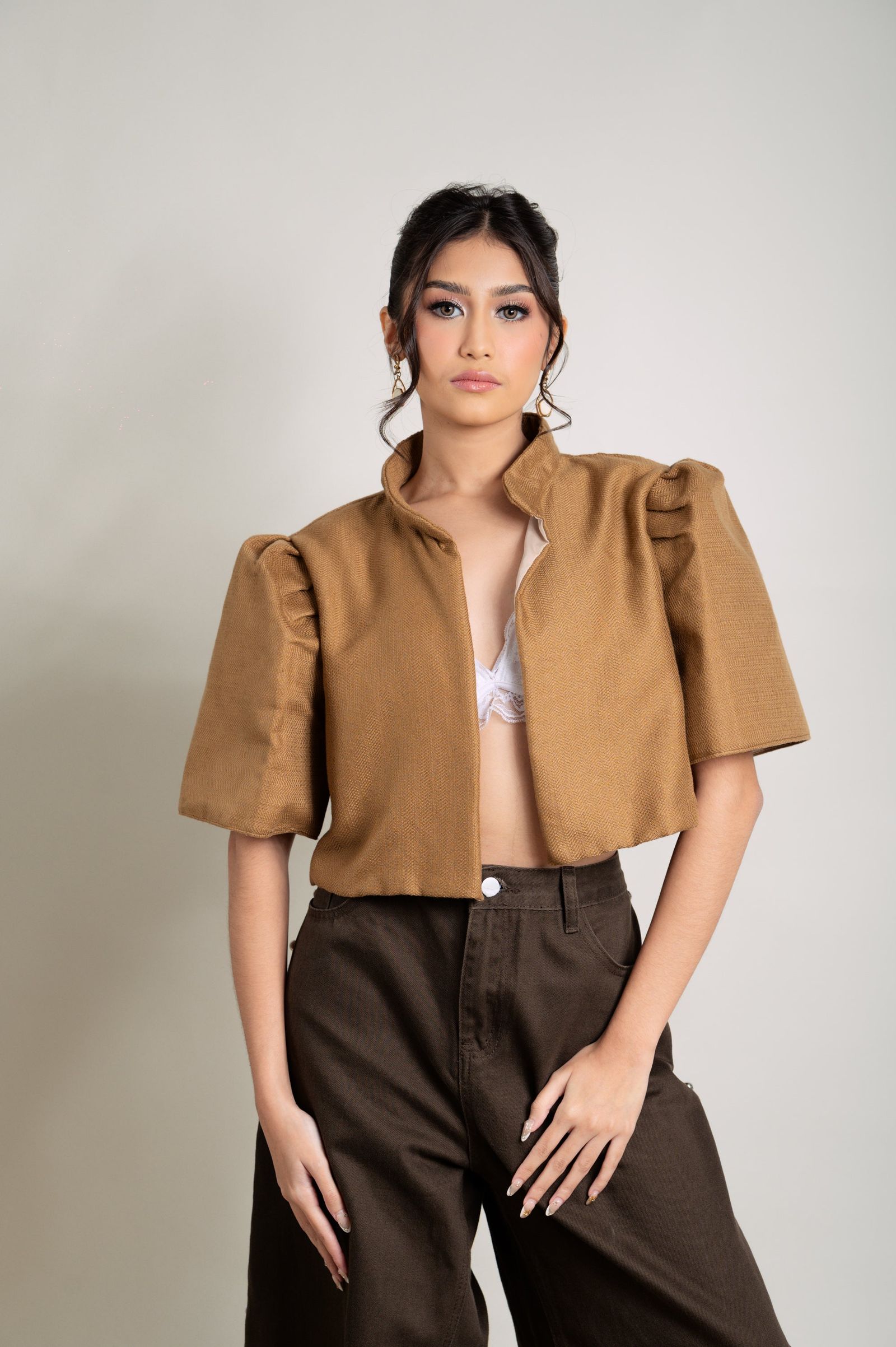
Modern Filipiniana: heritage you can wear on a Tuesday
Here's the thing about modern Filipiniana: it isn't a costume. It keeps what makes a Filipiniana a Filipiniana (the butterfly sleeve, the piña, the embroidery, the handwoven cloth) and puts it on pieces you can wear with what's already in your closet. A Filipiniana top with jeans. A bolero over a camisole and a pleated skirt. A piña bib for the office.
That's what we make at EMGEE by Get Spotted. Our Sora and Diwa tops have the structured sleeves and embroidery, in a cropped shape that works with denim.
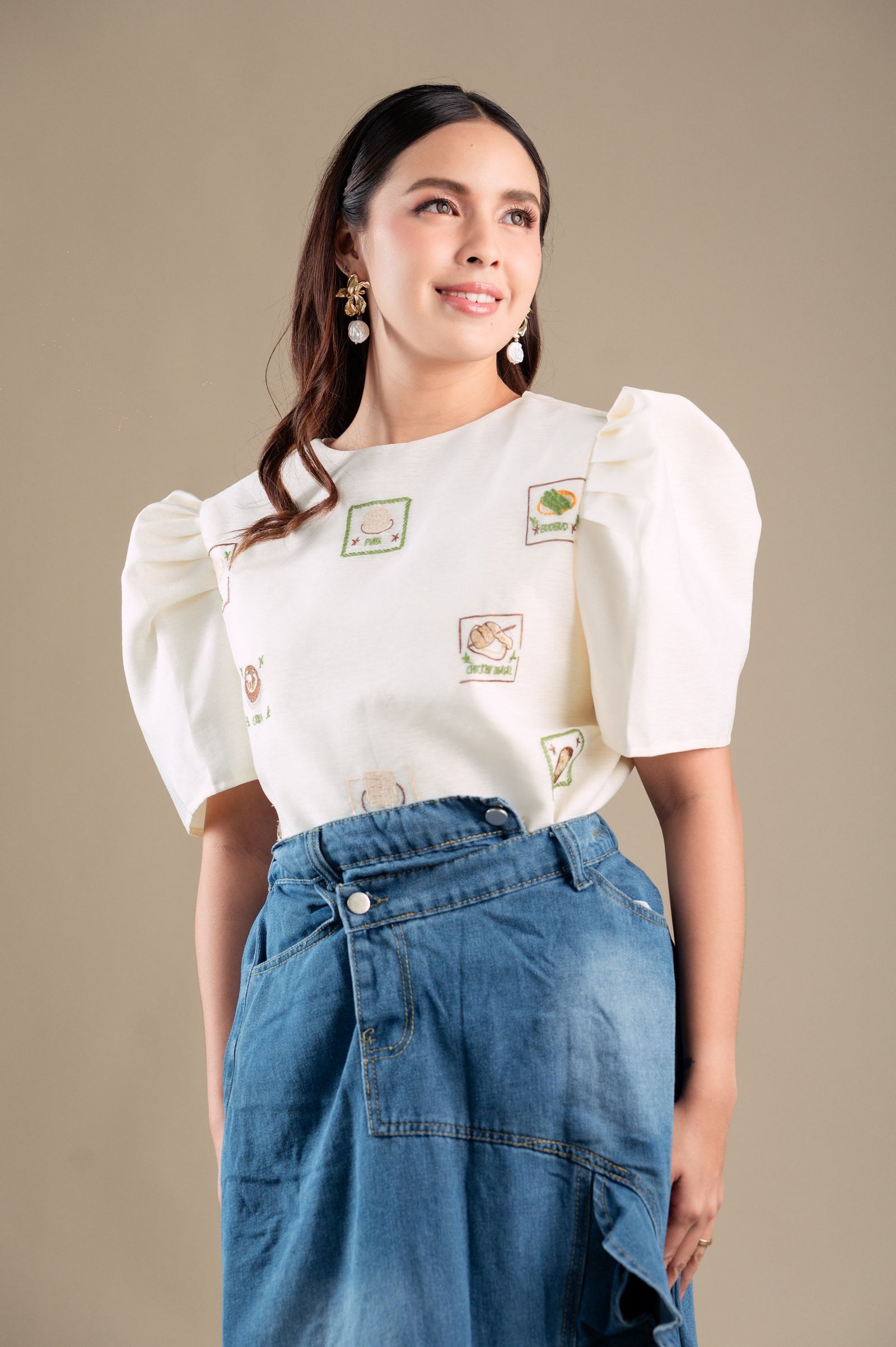
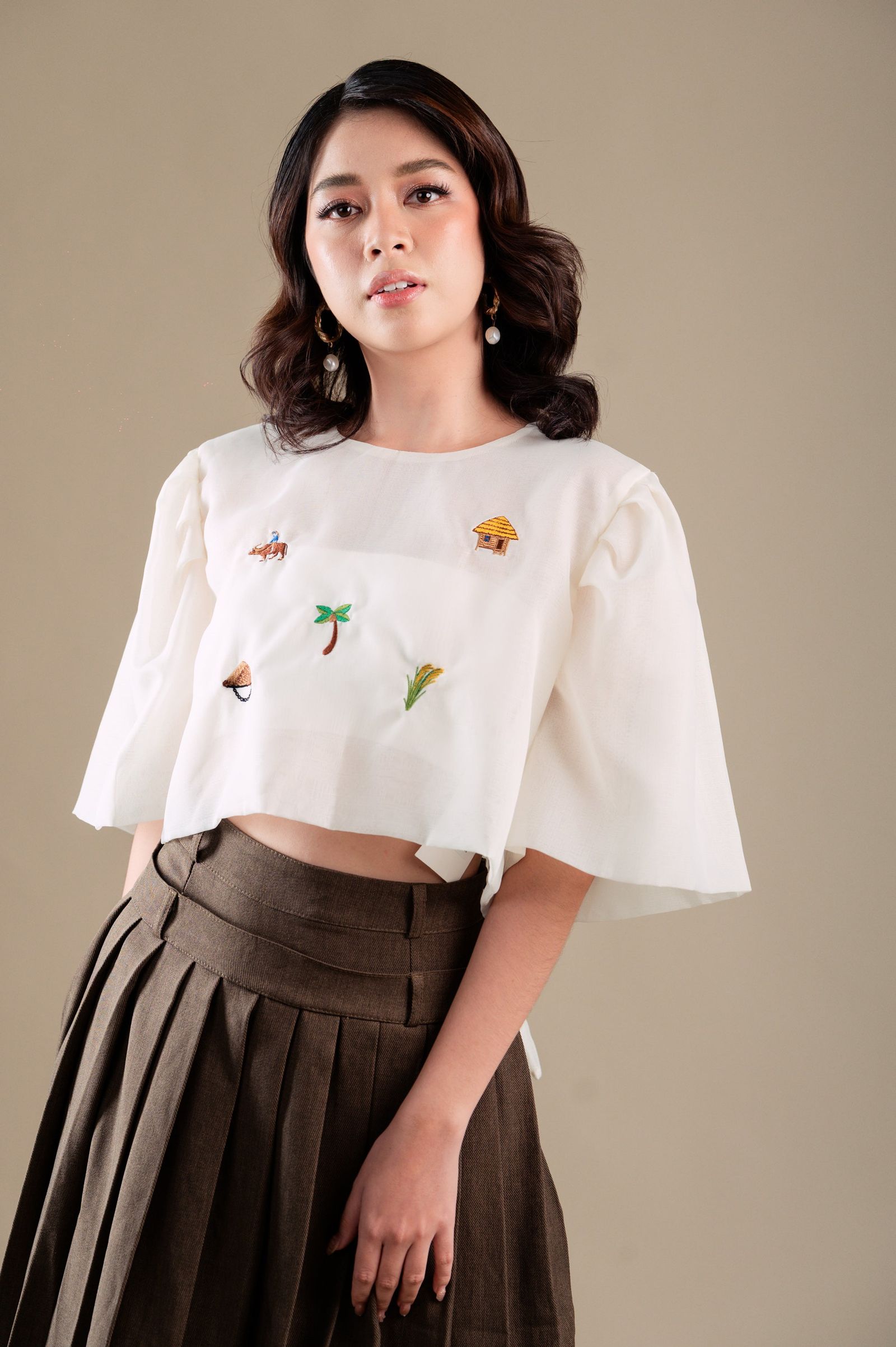
The bolero is the easiest way in. Throw one over a plain top and you're dressed for Buwan ng Wika, a Filipiniana-themed party, or a Friday at work.
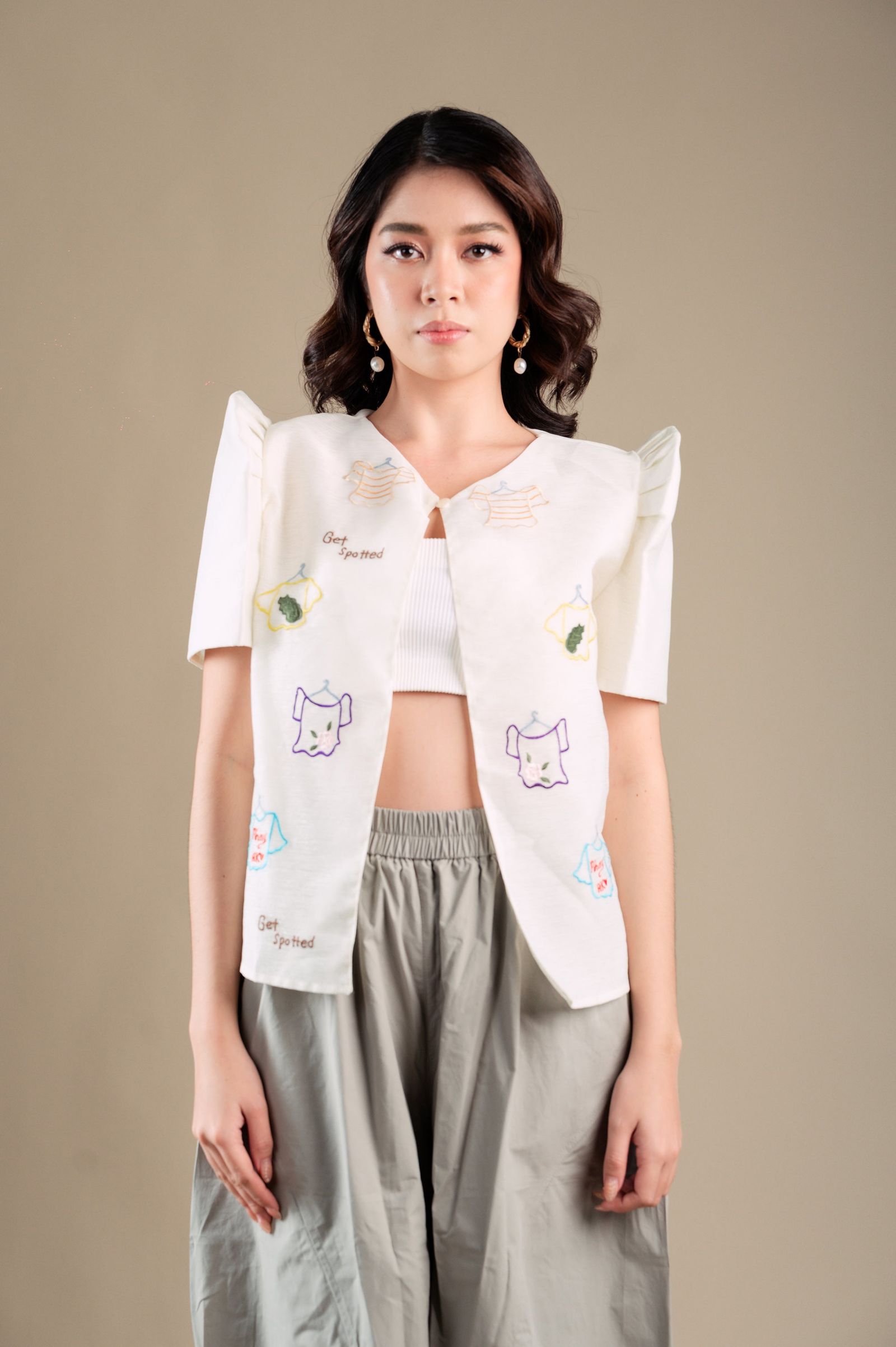
Hablon: Filipiniana woven in Negros
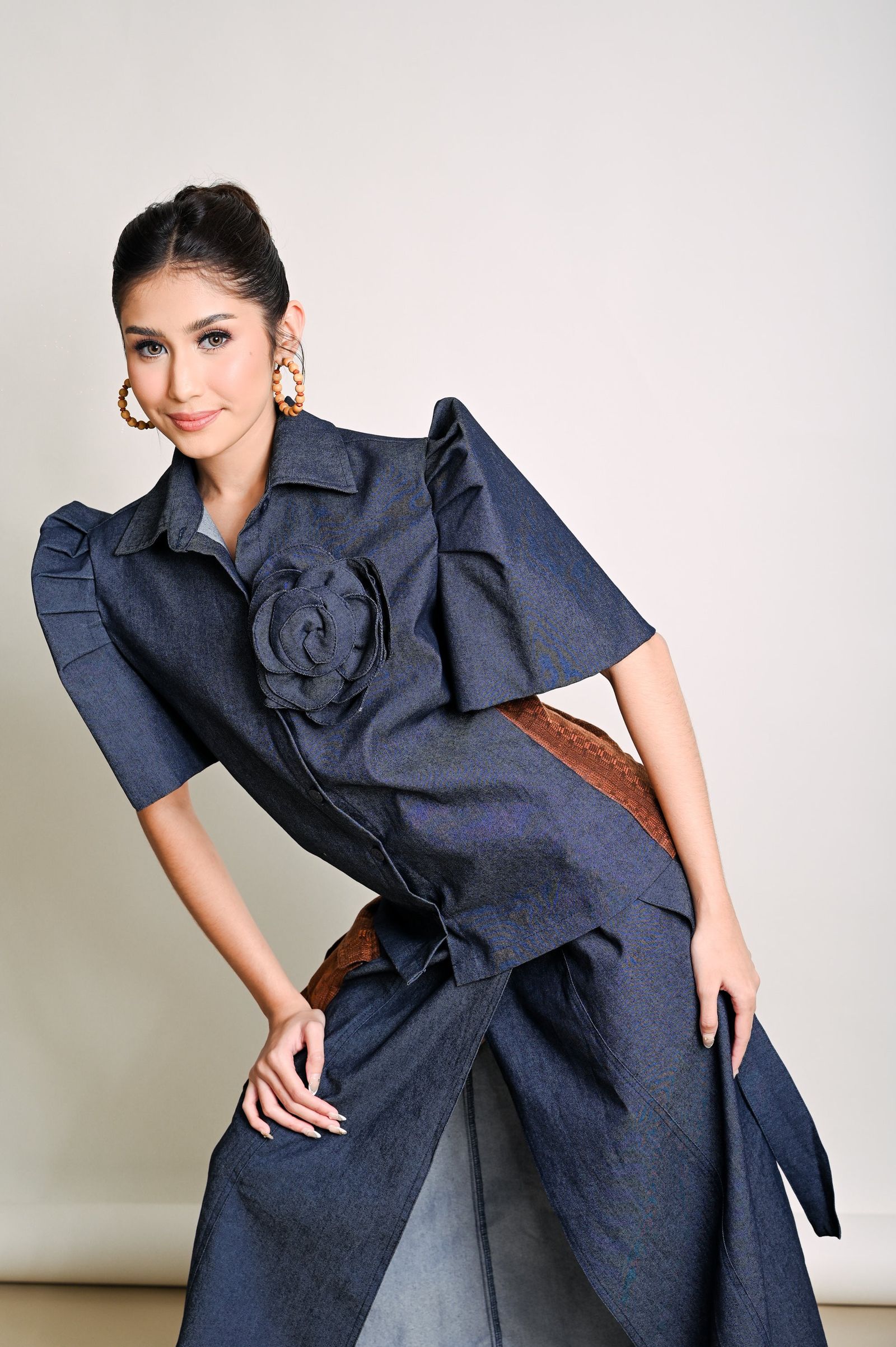
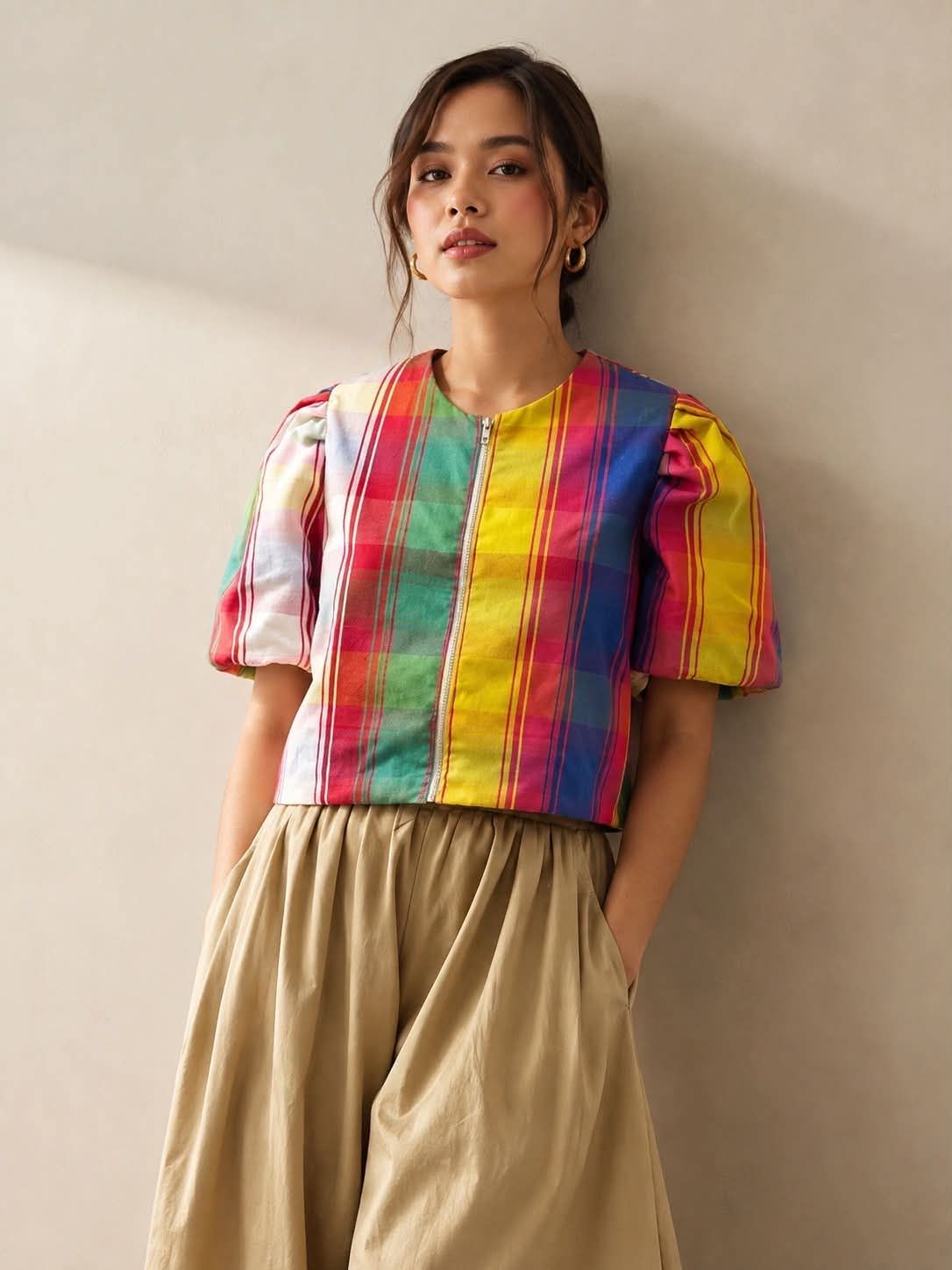
Some of our favourite pieces start on a loom. Hablon is the handwoven cloth of Panay and Negros, and for our CHICKS x Get Spotted pieces it's woven by the Negros Nine Weavers of Kabankalan.
How to wear modern Filipiniana
- To the office: a piña bib or a bolero over a white shirt or a plain shell, with tailored trousers.
- For Buwan ng Wika or UN Day: a Filipiniana top with a long skirt, or a full Maria Clara if you want to go all the way.
- To a wedding: guests can go modern, like a bolero over a cocktail dress. Ninangs and mothers of the bride usually go for a terno or a long Filipiniana gown.
- On a regular day: a Filipiniana top with jeans or wide trousers. That's it. That's the whole trick.
Questions we get asked
Is the Maria Clara the same as the baro't saya?
Close cousins. The Maria Clara is a dressier baro't saya, with the pañuelo over the shoulders and usually a tapis over the skirt.
What's the difference between a terno and a Filipiniana?
"Filipiniana" covers all of these dresses. A terno is one kind: a one-piece gown with flat, arched butterfly sleeves.
Can men wear Filipiniana?
Yes. The barong tagalog is the men's side of the story, and we make barongs for men and little boys.
Shop the whole Filipiniana collection, see our hablon pieces, or visit us at Ayala Malls Capitol Central in Bacolod and try them on.
Sources: Maria Clara gown, Wikipedia, Ramón Valera, Wikipedia, The terno keeps its relevance through the centuries, BusinessWorld, Traje de mestiza, Philippine Folklife Museum Foundation, The Evolution of Modern Filipiniana, Narra Studio
Picture sources (Wikimedia Commons): Underwood & Underwood, Manila, 1899 (public domain), Austin Craig, Josephine Bracken, 1896 (public domain), Ariel B. Ladrido, "Filipiniana Dress" (CC BY-SA 4.0), Ramon Reyes Lala, "The Philippine Islands", 1899 (no known copyright restrictions), Alden March, "The History and Conquest of the Philippines", 1899 (public domain), Fernando Amorsolo, "Portrait of Fernanda de Jesus", 1915 (public domain), FroyR, "WLF frobas (2)" (CC BY-SA 4.0). Product photos: Get Spotted.